
A fountain that is constantly topped up or a pond that mysteriously loses water can become a much bigger concern when water restrictions arrive. Preparing a water feature in advance is therefore less about switching everything off and more about finding and reducing unnecessary water loss.
Cape Town’s water restrictions have been lifted since November 2020, but permanent water-saving regulations remain in place. The City has also said that the risk of future restrictions has increased compared with previous years.
Ponds, fountains and larger water features all behave differently, so there is no single water-saving approach that works for every installation. The condition of the structure, pumps, filtration, pipework and water circulation all need to be considered.
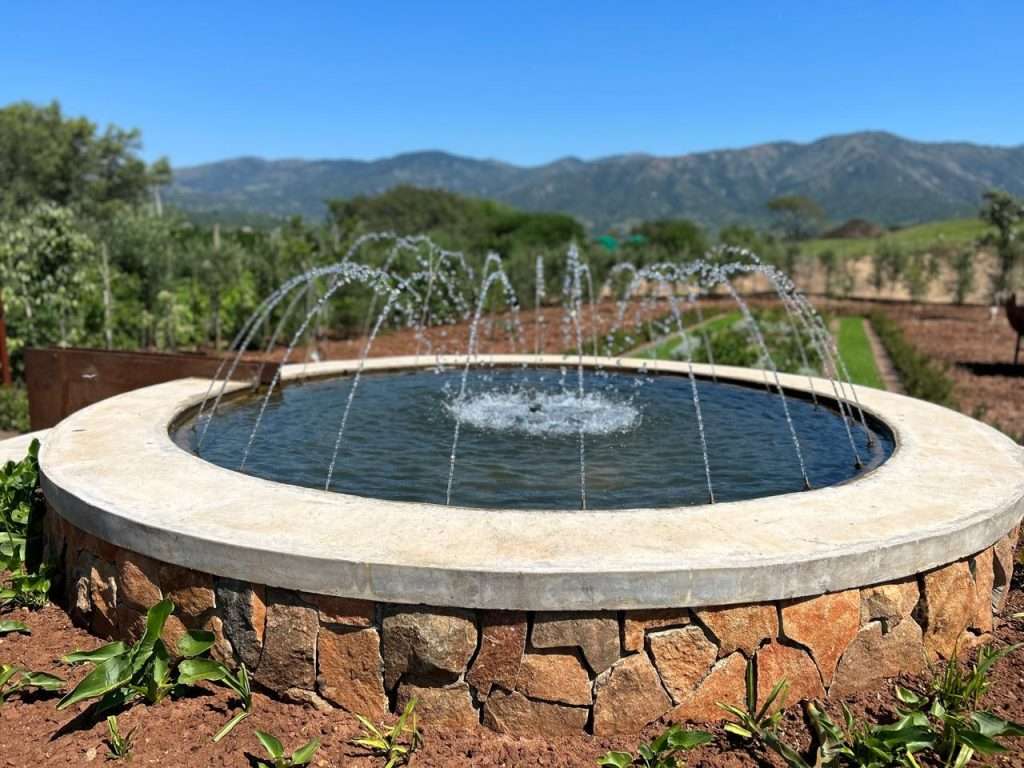
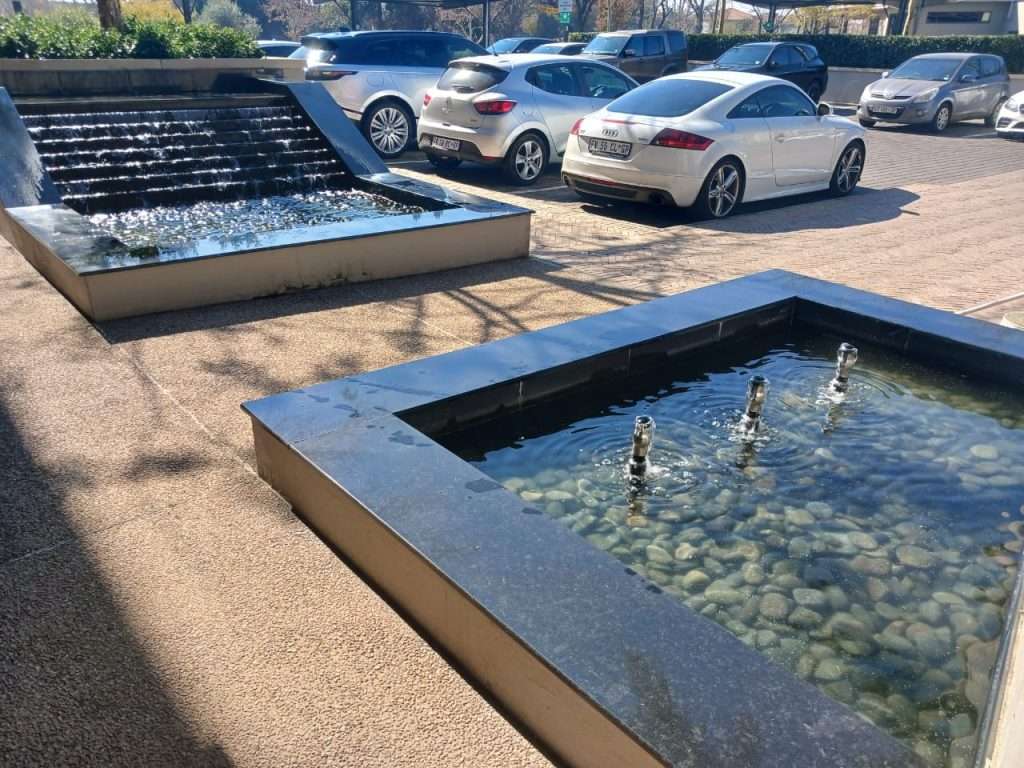
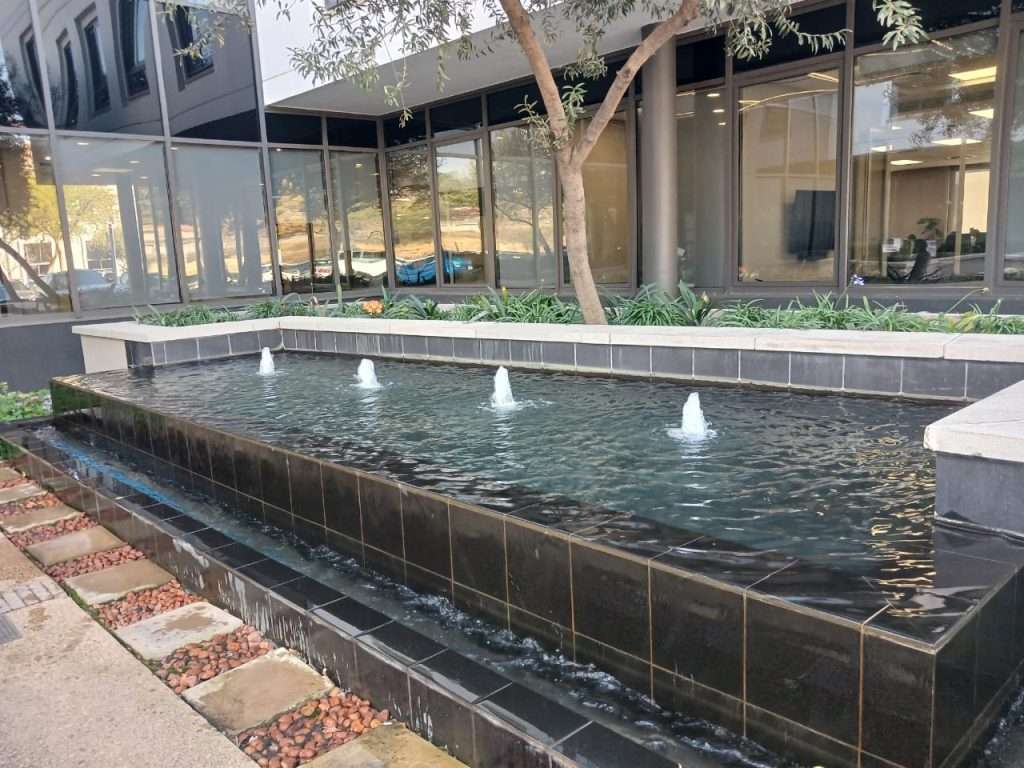
Check Your Water Feature for Leaks
Unexpected water loss should be investigated before restrictions become an issue. Ponds and fountains can lose water through leaks in the structure, waterproofing system, pipework, fittings or circulation equipment. Water loss can also be caused by normal evaporation, particularly in exposed features. A feature that requires frequent topping up may therefore need more than simply adding water. The source of the water loss should be identified first. A professional inspection can include:
- The structure and waterproofing
- Pumps and filtration
- Pipework and connections
- Water levels
- Fountain jets and nozzles
- Areas around the feature for signs of water loss
Cape Town’s water-wise guidance also advises checking water fittings and pipes regularly for leaks.
Reduce Evaporation and Unnecessary Water Loss
Evaporation is a normal part of maintaining outdoor water features. Wind and exposed locations can increase water loss, while fountains can also lose water through spray and splash. The aim is not necessarily to stop the feature from operating, but to identify avoidable water loss.
For example, fountain operation can be reviewed to determine whether it needs to run continuously or whether operating times can be adjusted when appropriate. Cape Town’s previous restriction measures have included restrictions on operating water features at certain restriction levels, so operating requirements should always be checked against the current municipal rules.
Check Pumps, Filtration and Water Circulation
Pumps and filtration systems are essential components of many ponds and fountains. They keep water moving, support filtration and, in some systems, help maintain water quality. Poor circulation can create problems with water quality and fountain performance. Blocked intakes, dirty filters, damaged pumps and restricted pipework can all affect how a system operates. Keeping the system properly maintained can help avoid unnecessary water loss and equipment problems.
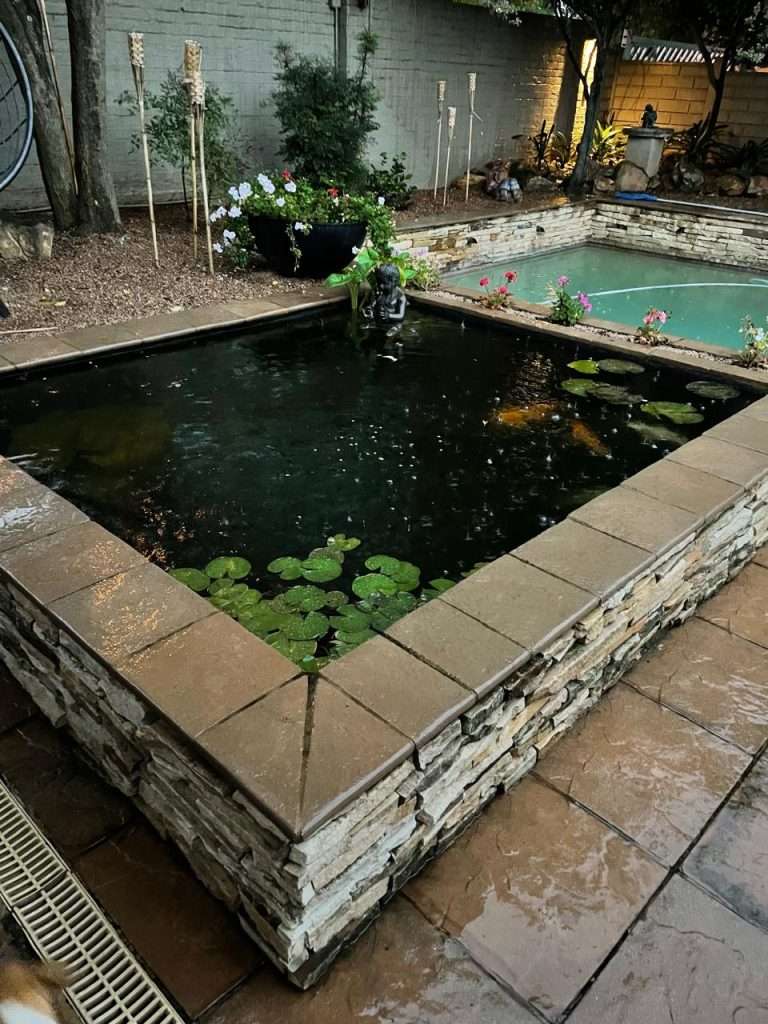
Keep Ponds and Fountains Clean
Debris such as leaves, dirt and organic material can accumulate in ponds and fountain basins. Over time, this can affect water quality and contribute to blockages in pumps, filters and circulation systems. Regular cleaning helps keep the system operating properly and makes it easier to identify problems such as damaged components or leaks. For ponds, cleaning requirements will depend on the type of pond and whether it contains fish, aquatic plants or biological filtration.
Manage Algae and Water Quality
Water quality is an important part of maintaining ponds and water features, particularly where fish or aquatic plants are present. Algae growth can be influenced by sunlight, nutrients, organic material and water movement. Maintaining circulation, filtration and general cleanliness can help manage the conditions that contribute to excessive algae. Keeping the water in good condition can also reduce the need for major corrective work or unnecessary water replacement.
Ponds need a different approach to fountains
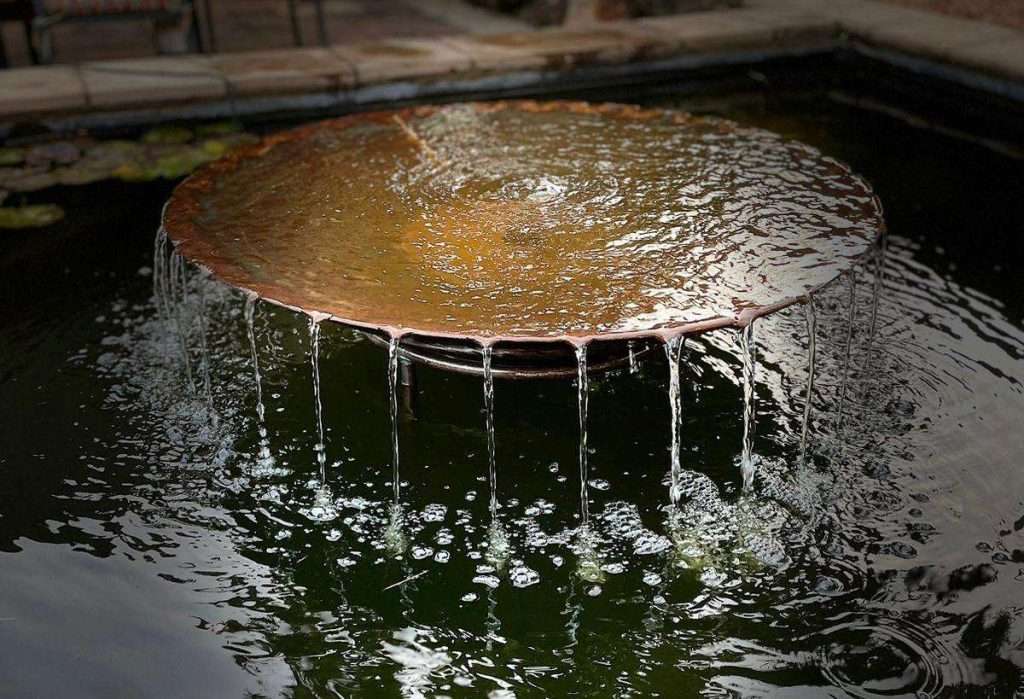
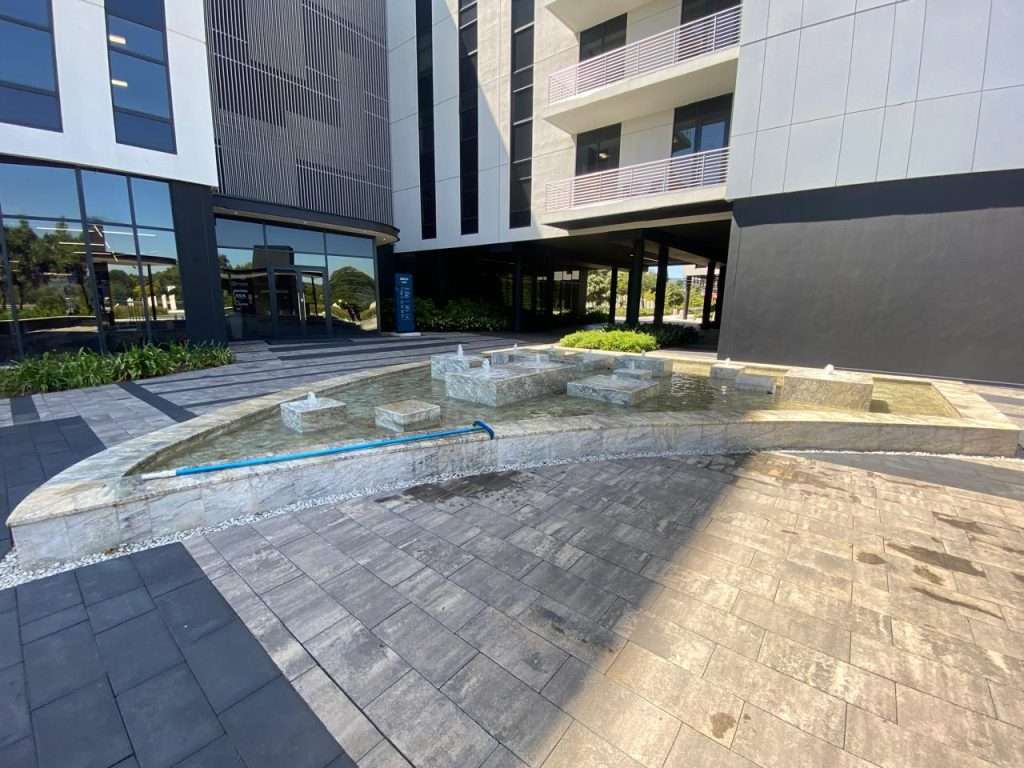
A koi pond, natural pond and ornamental fountain do not have the same maintenance requirements. Ponds may have biological filtration, fish, aquatic plants and other living components that need to be considered during maintenance. Fountains are generally more focused on circulation, water presentation, pumps, jets and nozzles.
The maintenance plan should therefore be based on the specific water feature rather than applying the same approach to every installation.
Check Waterproofing and the Structure
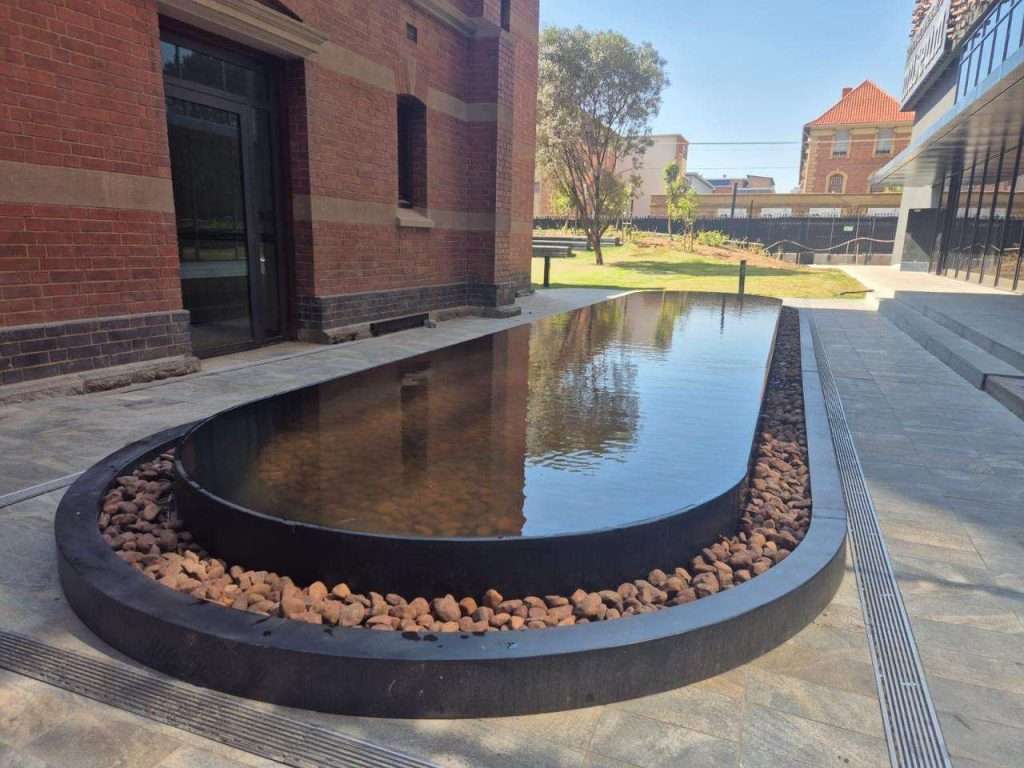
Waterproofing is an important part of any constructed pond or water feature. Deteriorated surfaces, cracks or failed waterproofing can contribute to water loss.
Checking the condition of the structure before restrictions become an issue gives property owners an opportunity to address problems while there is still time to investigate and repair them properly.
Waterscapes provides waterproofing, leak repairs and renovations for ponds and water features, with systems selected according to the construction and requirements of the installation.
Consider Alternative Water Sources
Alternative water sources can form part of a water-wise approach, but they must be suitable for the intended application and used according to local regulations.
Cape Town allows harvested rainwater to be used for certain applications and promotes the responsible use of alternative sources such as rainwater and groundwater.
Boreholes and wellpoints are subject to registration and other requirements in Cape Town. Alternative water systems also need to be properly managed to reduce potential health and environmental risks.
Don’t assume alternative water is suitable
Water from a borehole, rainwater tank or another source may have different characteristics from municipal drinking water. Before using an alternative source in a pond or fountain, its suitability for that particular system should be considered.
This is especially important for ponds containing fish or aquatic plants, where water quality can directly affect the living environment.
Prepare Before Restrictions Become an Issue
A water feature does not necessarily need to be switched off simply because water needs to be conserved. The first step is understanding where water is being lost and making sure the system is operating as efficiently as possible.
Check for leaks, maintain pumps and filtration, keep the feature clean, manage water quality and review how and when the feature operates.
Cape Town’s current water restrictions status and requirements can change, so property owners should always check the latest municipal regulations before making changes to how a pond or fountain is filled, topped up or operated.
Waterscapes provides water feature maintenance, repairs, waterproofing and installation services in Cape Town and Gauteng, with projects undertaken across South Africa and elsewhere in Africa.